Women of Nymbl AI | Nymbl Blog
Introduction
The AI frontier is here — it’s lurking inside the tools we use every day, making decisions we may not even know are being made, and rapidly reshaping what it means to work, create, and connect as humans.
We talk about artificial intelligence in terms of models, benchmarks, and scientific breakthroughs in this productivity renaissance. But underneath it all, there’s something far more personal. AI is making hiring and onboarding decisions. It's generating and curating the news and music content filling our feeds. It’s a fly on the wall in most of our homes. At times, it’s handed the keys to the castle for systems that touch healthcare, education, finance, and beyond — often before guardrails are bolted on.
AI isn’t just about the technology. It's about us — the people building it, deploying it, and living with the consequences, whether we signed up for them or not.
What is the price of authenticity?
When AI can write a compelling essay, generate a piece of art, create a video or simulate a conversation so convincingly real that you can't tell the difference — what happens to the value of the real thing? What happens to the person who spent years developing a voice, a craft, a perspective that is uniquely theirs?
We are living in a world where the lines between human-generated and AI-generated are increasingly blurred. While there are some extraordinary benefits to that — accessibility, efficiency, democratized creativity — there is also a cost we haven't fully reckoned with yet.
Authenticity has always been a currency. In relationships, in leadership, in art, in business — we reward the true original. We trust the genuine artifact. We connect with what feels authentic. AI doesn't erase that instinct, but it does complicate it in ways we are only beginning to understand.
The risk isn't that AI creates things. The risk is that we stop valuing the human act of creating — and that we lose something irreplaceable in the process, perhaps without even noticing it was gone.
Are we doing enough to prevent bias?
Let me tell you about something I experienced firsthand that I haven't been able to stop thinking about. A job application — submitted by a qualified candidate — was rejected instantaneously. Not after a recruiter review. Not after a phone screen. Instantaneously. The kind of speed that tells you a human was never in the loop. The kind of speed that tells you that an algorithm made the call.
My suspicion? An age filter was tripped. To be clear: I can't prove that suspicion with certainty. But that's almost the point. When AI is making consequential decisions at that speed, with that little transparency, accountability becomes nearly impossible to trace. The candidate never knew why. There was no explanation, no appeal, no human to ask.
And it turns out, my story isn't unique. A current legal case against Workday alleges AI used in their applicant recommendation system flagged applicants based on race, age, and disability. This case is in the discovery phase and could impact millions of people.
As humans, we can and must do better.
The Legacy We're Leaving Behind
I think about the next generation and the kind of legacy we leave behind with this AI revolution.
The systems being built and deployed today are not neutral. They carry the assumptions, the blind spots, and the biases of the people who built them. Once these systems are embedded at scale, they become very hard to undo.
What future are we creating for the young women entering the workforce today? For the kids growing up with AI as a fabric of their lives? Are we building a future where AI expands what's possible — or one where it quietly narrows it, based on data points and decisions they never knew were being made?
We still have choices and control to shape some of this narrative. Decisions being made about how AI is designed, who has a seat at the table, and what values get encoded into these systems are not inevitable. They are choices. And choices can be made differently.
That is why initiatives like Women of Nymbl AI matter beyond a hashtag. Diversity in AI isn't a feel-good goal — it's a design requirement. When more perspectives are in the room where these systems are built, we get better systems and outcomes. We catch the blind spots and biases earlier. We ask the questions that wouldn't otherwise get asked.
Keep It Personal
AI is personal because its consequences are personal. They land on real people — in their job searches, their creative work, and their sense of worth and visibility.
The Women of Nymbl AI series exists to keep humanity in the conversation. To make sure that as we build in this new frontier, we design it with intention and with diverse voices at the table.
The questions in this post don't have clean answers. But they are the right questions to be asking. And the fact that we're asking them — out loud, publicly, as a company — is the whole point.
AI is personal. Let's keep it that way.
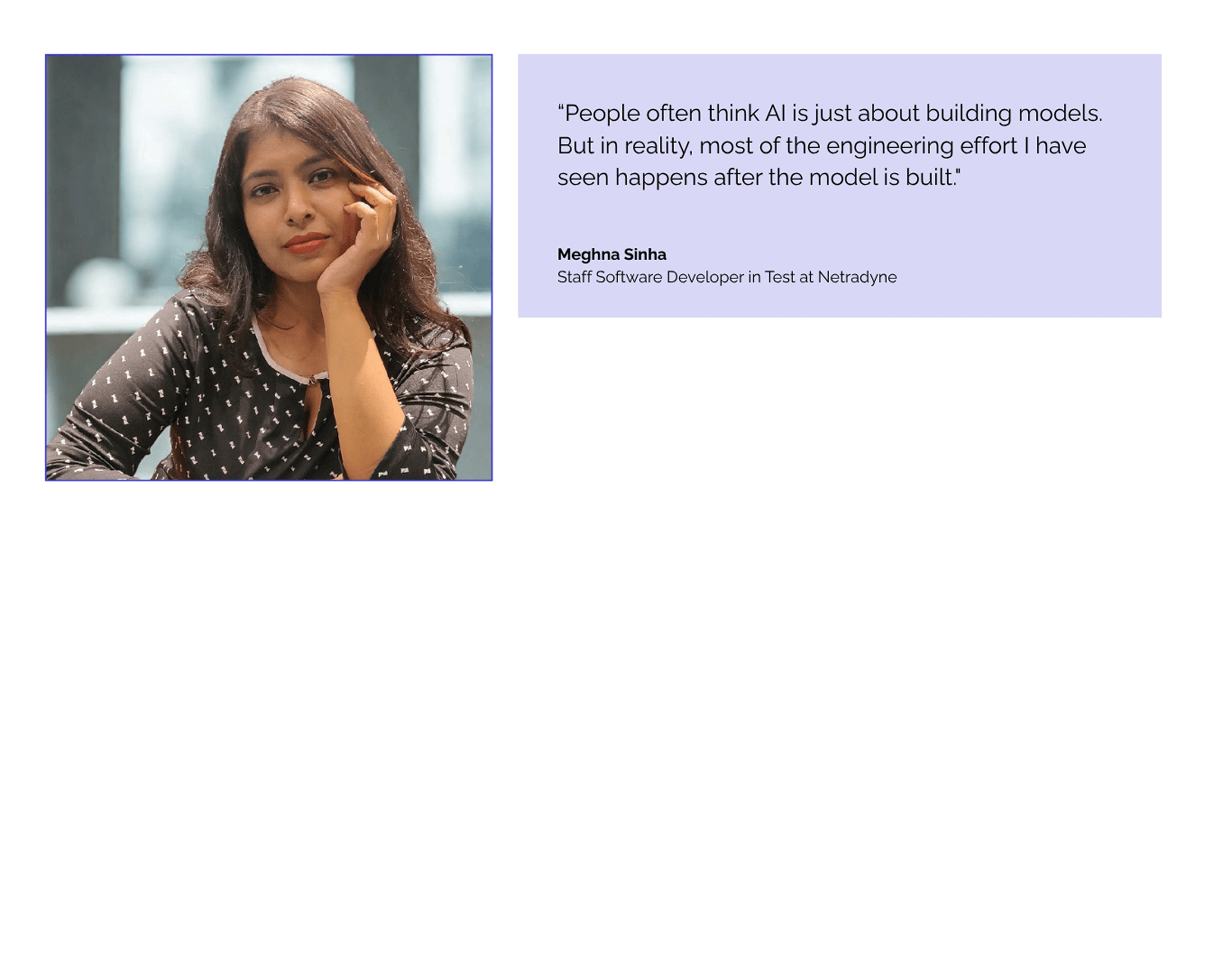
This post is part of the Women of Nymbl AI series — a campaign exploring real perspectives on artificial intelligence from the women building it at Nymbl. Follow along on LinkedIn using #WomenOfNymblAI.
.png)